India aims to become a major defence exporter
Can India become a global arms exporter? Rajnath Singh’s defence dream explained
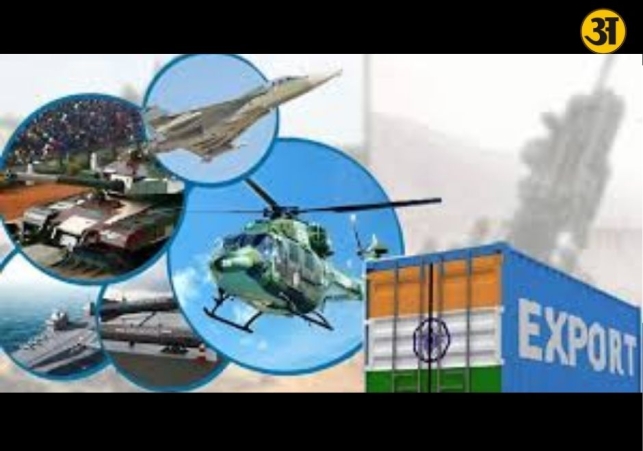
India has set an ambitious goal for the future of its defence industry. Defence Minister Rajnath Singh recently said that India could become the world’s largest exporter of defence equipment in the next 25 to 30 years. He shared this vision while speaking at an event in Shirdi, Maharashtra, where he stressed the importance of increasing local manufacturing and reducing dependence on foreign countries.
According to the defence minister, India is writing a new chapter in defence and space technology. He said the country is moving towards becoming self-reliant and stronger in making military equipment. Rajnath Singh also explained that the private sector will play a major role in helping India achieve this dream.
At present, private companies contribute around 25 to 30 percent to India’s defence production. However, the government wants this number to rise to nearly 50 percent. Rajnath Singh believes that cooperation between government organisations and private companies can help India grow faster in defence manufacturing.
He also said that India should become a major centre for ammunition, automation and modern defence systems. According to him, Indian industries now better understand future warfare and changing military technology.
However, experts believe this goal may be difficult to achieve quickly. Becoming the biggest arms exporter in the world would require years of planning, large investments, better technology and stronger manufacturing systems.
A recent report by the Stockholm International Peace Research Institute (SIPRI) shows that India still has a long way to go. The report explained that India is not even among the top 25 arms exporters in the world right now.
The United States remains the world’s largest exporter of weapons. According to the report, America supplied around 42 percent of global arms exports between 2021 and 2025. France was second, contributing about 9.8 percent, while Russia, Germany and China followed.
This shows how difficult competition is in the global defence market. Countries leading defence exports have spent decades building strong technology, research systems and trusted manufacturing networks.
India still imports many weapons
Even though India is increasing domestic defence production, it still imports many military systems from other countries. According to SIPRI, India is currently the world’s second-largest importer of major weapons.
India’s share in global arms imports stood at around 8.2 percent between 2021 and 2025. Ukraine ranked first due to ongoing conflict and defence needs.
Russia remains India’s biggest supplier of military equipment, followed by France and Israel. India buys fighter aircraft, missiles, defence systems and many advanced technologies from these countries.
Experts say India imports weapons mainly because of security concerns involving neighbouring countries such as China and Pakistan. Border tensions and military preparedness require advanced equipment, some of which India still cannot fully produce on its own.
However, experts also pointed out that India has improved its local defence manufacturing in recent years. Indigenous missiles, drones, naval ships, defence vehicles and military systems are increasingly being developed inside the country.
The government’s focus on “Atmanirbhar Bharat” or self-reliance has encouraged local production and reduced some dependence on imports.
Still, defence experts say India cannot become a major exporter unless it improves research and development, often called R&D.
Former Navy chief Admiral Karambir Singh explained that research is the key to building modern weapons. According to him, countries become defence leaders only when they continuously improve technology.
He gave China as an example, saying the country invested heavily in research and manufacturing, helping it grow into a powerful industrial and military force.
Admiral Singh explained that modern weapons cannot remain successful forever. Technology changes very fast, and defence products must constantly improve. If India wants to export globally, it must create cutting-edge systems that are better or equal to international standards.
He also said that India needs stronger teamwork between educational institutions, scientists, defence industries, startups and investors. More support for innovation is necessary if India wants to compete with powerful defence exporters.
ALSO READ: Trump says he will headline America’s 250th Independence Day event after artists pull out
ALSO READ: Iran rejects Trump’s ceasefire claim, says no final agreement has been reached
Better research and startups can help India grow
Experts believe India has many strengths that can help its defence sector grow in the future. One major advantage is India’s young workforce and large manufacturing capacity.
According to Admiral Singh, changing global politics may also help India. Many countries are looking for alternatives to China for manufacturing because of supply chain concerns. This trend is often called the “China Plus One” strategy.
As countries search for new production partners, India could become an important centre for defence manufacturing and exports.
The retired Navy chief also stressed the need to support startups and small businesses. Startups and micro, small and medium enterprises (MSMEs) are developing drones, surveillance systems, artificial intelligence tools and defence software that may become important in future warfare.
Government policies are already encouraging such companies, but experts believe more support, funding and faster innovation are still needed.
India also has growing shipbuilding capabilities and could benefit from global demand for military and civilian vessels. Countries with ageing populations and labour shortages may increasingly look toward India for manufacturing partnerships.
Still, becoming the world’s top arms exporter will not happen overnight. Experts believe a more realistic target may be for India to enter the top 10 or top 15 arms exporters over the next few decades.
To achieve this, India will need better technology, stronger quality control, faster production and continued investment in defence research.
Despite the challenges, many experts believe India has strong potential. With steady reforms, innovation and partnerships between government and industry, the country may become a major force in global defence exports in the future.
For now, Rajnath Singh’s statement reflects a long-term dream — one that may take time but could reshape India’s place in the world defence market.
Related News